

The difficult question in Arrival was only one sentence
Asking aliens why they came takes a surprising amount of preparation. Fluent AI can make it easy to skip that preparation when assigning work.
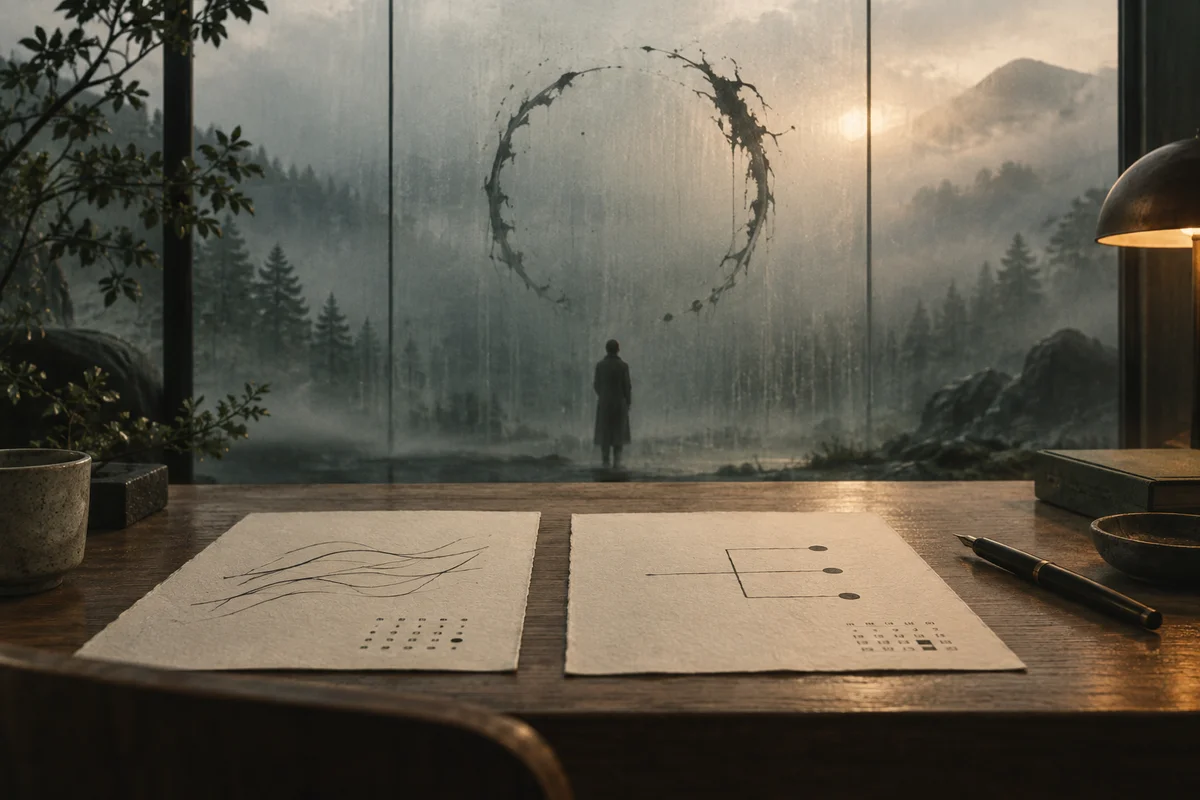
This essay discusses the premise and an early scene in Arrival. It does not reveal the ending.
In Arrival, what people want to know from the aliens is simple: why have they come to Earth?
Fair question. Their spacecraft have already arrived. You would at least like to know whether to put the kettle on or lock the door.
But the linguist Louise explains why they cannot ask it yet. First, they need to establish that the visitors understand what a question is. They need to distinguish between the beings in front of them and everyone who has arrived. And after all that, they need enough shared vocabulary to understand the answer.
A short sentence can contain a lot of things both sides need to agree on.
I can understand the impatience here. Something enormous is happening outside, and inside they are still working out what “you” means. If I were in that meeting, I suspect I would be close to asking whether we could just try the question first.
But suppose they did answer.
How would we even know it was an answer?
With aliens, the problem is visible. The sounds are unfamiliar. So is the writing. It is hard to forget how little you understand about each other.
Talking to AI feels different. Its Korean is very good.
“Yes, I understand” is a particularly reassuring sentence. Sometimes it restates the task more neatly than I put it. That makes it tempting to believe we now have the same thing in mind.
Suppose I give an AI a document and ask it to tidy it up.
It adds headings, shortens the sentences, and removes repetition. It looks better. But perhaps I wanted it to notice that one paragraph says we are launching on Friday while another says next month. If those conflicting dates come back beautifully formatted, I have to explain the task again.
The AI did tidy up the document. I did ask it to.
Both sides can do what they say and still miss each other.
That does not mean we should stop saying “tidy it up.” Defining every word would take the whole day. When I ask a colleague to get me a coffee, I do not specify the liquid temperature and the cup material. Working together is partly about learning what can be left unsaid.
With AI, though, it seems worth looking at what I have left unsaid.
I could ask it to work on just the first two paragraphs. Looking at that result might make it easier to explain whether I want a sentence edit or a review of the content. A difference that takes ages to explain in the abstract can become obvious in two paragraphs.
There is a slightly embarrassing possibility here: I may only then discover what I wanted.
I know that the result is not what I meant. Explaining what I did mean can be harder. Perhaps I handed over a document I vaguely disliked and expected the other side to untangle that vagueness too.
In that case, blaming the whole mismatch on the AI’s comprehension would leave me a little uneasy.
Agreeing on the task is not the end of the work, of course. It could understand that I want conflicting dates found and still miss one. Checking what task it is doing and checking whether it did that task properly both remain necessary. A conversation with aliens cannot explain every problem with AI.
Still, that scene in Arrival makes me want to pause after “I understand.” Instead of adding another long explanation, I would like to see it do one small thing with what it has understood.
Checking whether the other side understood me might turn into finding out what I meant.
Back at that document, there is probably a question to settle first.
Which of those two launch dates is right?
That is something I need to check and tell it.